


.svg)
.jpg)


.webp)






Download our app


Summer holidays, half terms and Christmas slowdowns can make any diary look lighter. The most successful trainers don't fight seasonality - they plan for it.
Every personal trainer knows the feeling. A few regular clients go away. School holidays arrive. Sessions start moving around. Suddenly, a fully booked week becomes a partially booked one.
It's easy to see quieter periods as a problem, but seasonal fluctuations are a normal part of the fitness industry. The trainers who build sustainable businesses aren't the ones who avoid them—they're the ones who prepare for them.
Here are five things worth remembering when the diary starts looking a little lighter.
1. Seasonal Slowdowns Are Normal
Summer holidays, long weekends and Christmas breaks affect almost every service-based business.
Clients travel. Family commitments increase. Routines change.
A quieter month doesn't automatically mean clients are leaving or your business is failing. Often, it's simply part of the annual cycle.
The strongest PTs track performance across an entire year rather than judging success week by week.
2. Retention Matters More Than Acquisition
When bookings slow down, many trainers immediately focus on finding new clients.
In reality, existing clients are often your most valuable asset.
Use quieter periods to:
- Check in with current clients
- Review goals and progress
- Refresh programmes
- Rebook future sessions
- Strengthen relationships
Clients who feel supported during periods of inconsistency are often the ones who stay with you the longest.
3. Cash Flow Beats Revenue
A business can have a great month and still struggle financially.
One of the biggest mistakes self-employed professionals make is assuming busy periods will last forever. The trainers who navigate quieter months most successfully are often the ones who use them to secure future revenue - launching September challenges, taking programme commitments early and locking in bookings before demand returns.
Quieter periods are also a good opportunity to review your CRM, reconnect with former clients and follow up with leads that may have gone cold. The goal isn't to earn the same amount every month—it's to create a business that can handle natural fluctuations without creating unnecessary stress.
4. Flexible Overheads Can Protect Profitability
Revenue isn't the only number that matters. Costs matter too.
When client demand fluctuates, fixed expenses can quickly become a source of pressure. The more overheads a business carries, the less flexibility it has during slower periods.
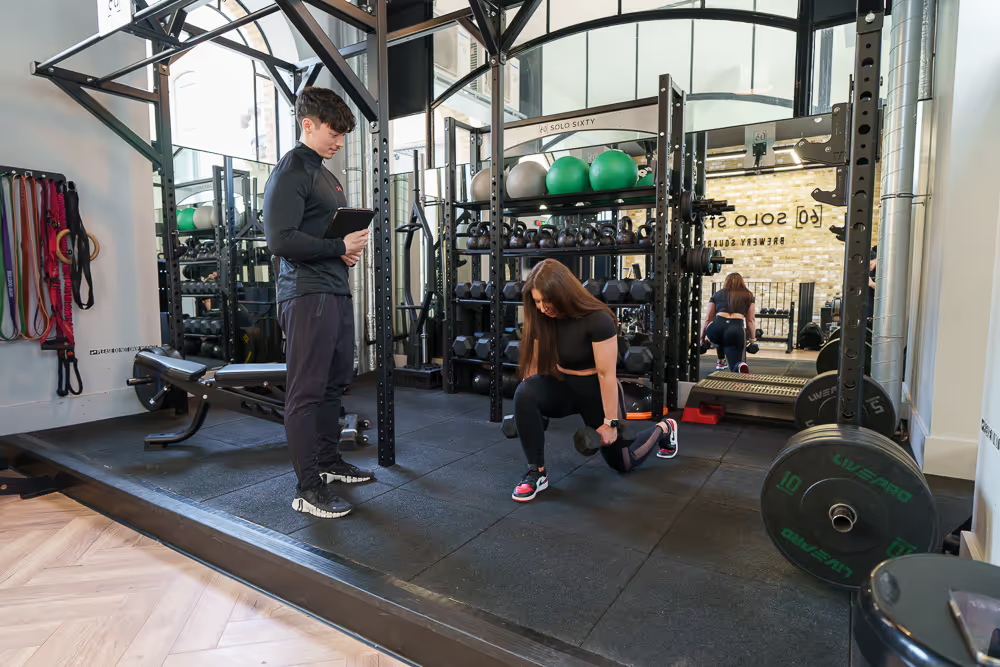
That's one of the reasons many trainers choose SOLO60. There are no rental agreements, no commission structures and no monthly facility commitments. Trainers simply book the space when they need it, helping keep costs aligned with demand.
5. A Lighter Diary Creates Space to Build the Business
Busy periods are great for delivering sessions.
Quieter periods are often where growth happens.
Use the extra time to:
- Create content
- Improve client onboarding
- Film exercise demonstrations
- Build referral partnerships
- Review your pricing
- Develop new services
Many SOLO60 trainers also use private studio time to record content, meet prospective clients or work on their business between sessions.
The work completed during quieter months often pays dividends when demand picks up again.
Every PT experiences quieter periods. The difference is how they respond to them.
Focus on retaining clients, understand your cash flow, keep overheads under control and use the extra time to strengthen your business. Seasonal slowdowns are rarely the end of momentum—they're often an opportunity to build the foundations for the next period of growth.
SHARE


MORE FROM
PRO TIPS
:

.svg)








.svg)


